
Climate Change Edition
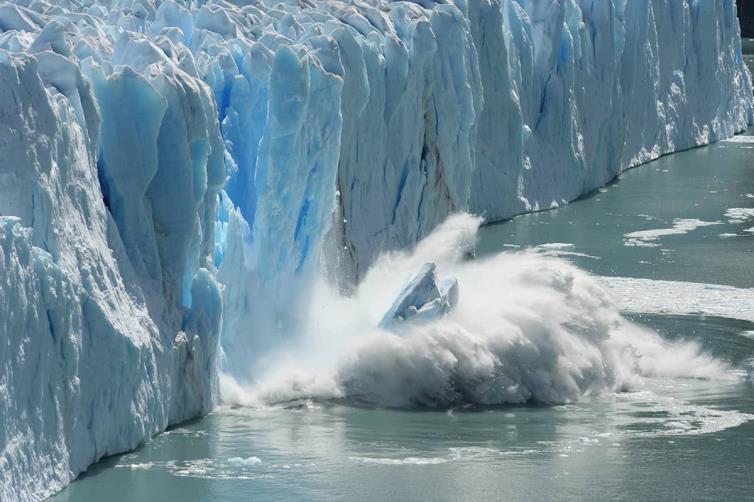
“Glacial Melting Is Accelerating, Driving Sea Level Rise and Depleting Freshwater,” reads one headline; “Melting Glaciers Caused Almost 2 cm of Sea Level Rise This Century, Study Reveals,” the BBC announced. New research led by scientists at the University of Zürich and the University of Edinburgh shows the world’s glaciers have been losing 273 billion tons of ice mass annually, causing oceans to rise by nearly a millimeter per year, and the process has been accelerating in recent years. The 273 billion tons of ice lost in a single year "corresponds to the [water] consumption of the entire global population in 30 years, assuming 3 litres per person per day", a scientist told BBC News.
So far this century, glaciers have lost approximately 5% of their total volume. Regional losses were highly variable; the Antarctic and subantarctic islands lost 2% of their volume but central Europe’s glaciers lost 39%. Collectively, since the turn of the century they have lost more than 6,500 billion tons — or 5% — of their ice, causing an 18 mm (almost 2 cm or 0.7 in) rise in global sea levels. [theguardian.com/ environment/2025/feb/19/]
The scientists used several methods to measure glacial ice loss, from the traditional method of manually comparing the amount of snow that accumulates on top of a glacier against the amount of water melting off of it, to much more advanced methods using satellites. One method, photogrammetry, created 3D models of the glaciers over time from repeated satellite photos. The researchers also used radar and laser ranging instruments from NASA’s Ice, Cloud and Land Elevation Satellites (ICESat and ICESat-2) and the European Space Agency’s CryoSat-2 missions to measure changes in surface topography in a process called altimetry, which “combined with estimates of
the snow density change [were used] to estimate the glacier’s total mass change.” In addition, changes in Earth’s gravitational field using data from NASA’s Gravity Recovery and Climate Experiment (GRACE) and its successor, GRACE-FO, allowed the researchers to estimate glacial mass changes over wide areas.
“Sea level rise affects all of us,” a study author said. “Most of the world’s population lives near water, whether it’s rivers or coasts, and so starting to lose coastline, as it moves further inland based on sea level rise, is going to affect a lot of people. There’s regions in the South Pacific where many people live on low-lying islands, and it’s going to take a massive humanitarian effort to deal with what is going to be a humanitarian crisis as we start losing places that are habitable just due to sea level rise,” he said. “We will directly notice the melting of these glaciers. Because they are located where many people live, it will affect drinking water supplies, in particular in South America and Asia. And the risk of flooding after the melt season also poses a danger,” said another researcher.